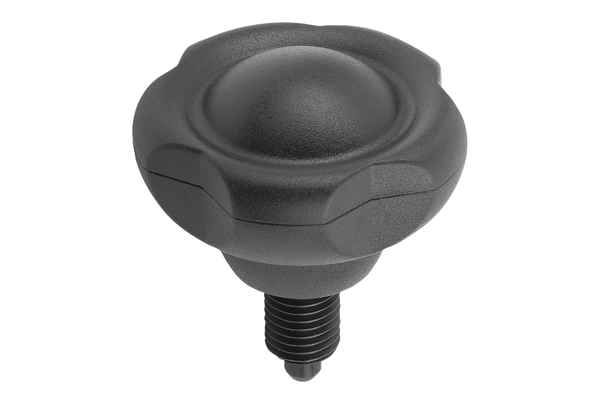
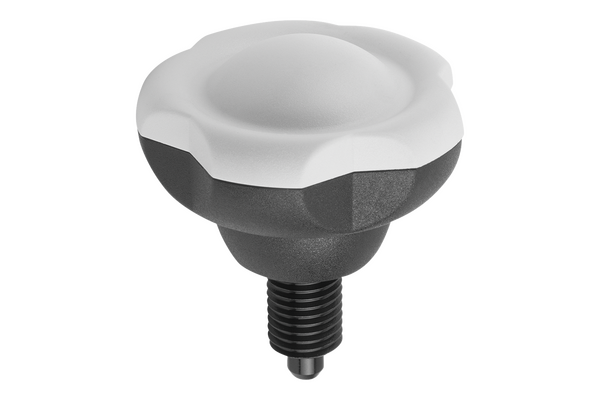
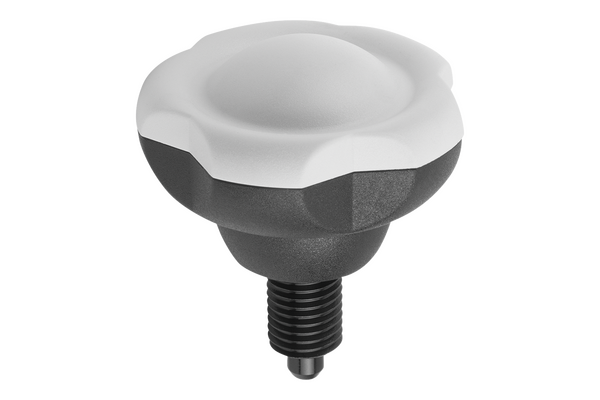
PAK1674.20410201
Latch with stop, Right-hand, D=10, M20X1, 5, Style A with threaded bush, Burnished steel
Estimated delivery: On request
Latches are used to prevent changes in the engagement position, caused by transverse forces. When the latch is turned by 180°, the locking guide pin retracts, thus allowing the engagement position to be changed. The detent notch causes the latch to be held in this position, so that the locking guide pin remains retracted.
A stop of 180°–as steel latches prevents the engagement notch from coming loose and the locking guide pin from protruding again.
The choice of stop side (left, right) determines the direction of rotation of the latches.
Material:
Latch 1.0503.
Threaded bush and guide pin in free-cutting steel.
Compression spring 1.4310.
Version:
Burnished threaded bush and latch.
Guide pin for locking, hardened, polished and burnished.
Compression spring with untreated surface.
Advantages:
When the latch is turned by 180°, the locking guide pin retracts.
180° –Stop with unilateral direction of rotation.
On request:
Special versions.
Accessories:
Retaining part K0638.
Locating bushes K1290, K1839, K1840.
Drawing note:
1) Left-hand stop
2) Right-hand stop
| Material | Steel |
|---|---|
| Finishing | Burnished |
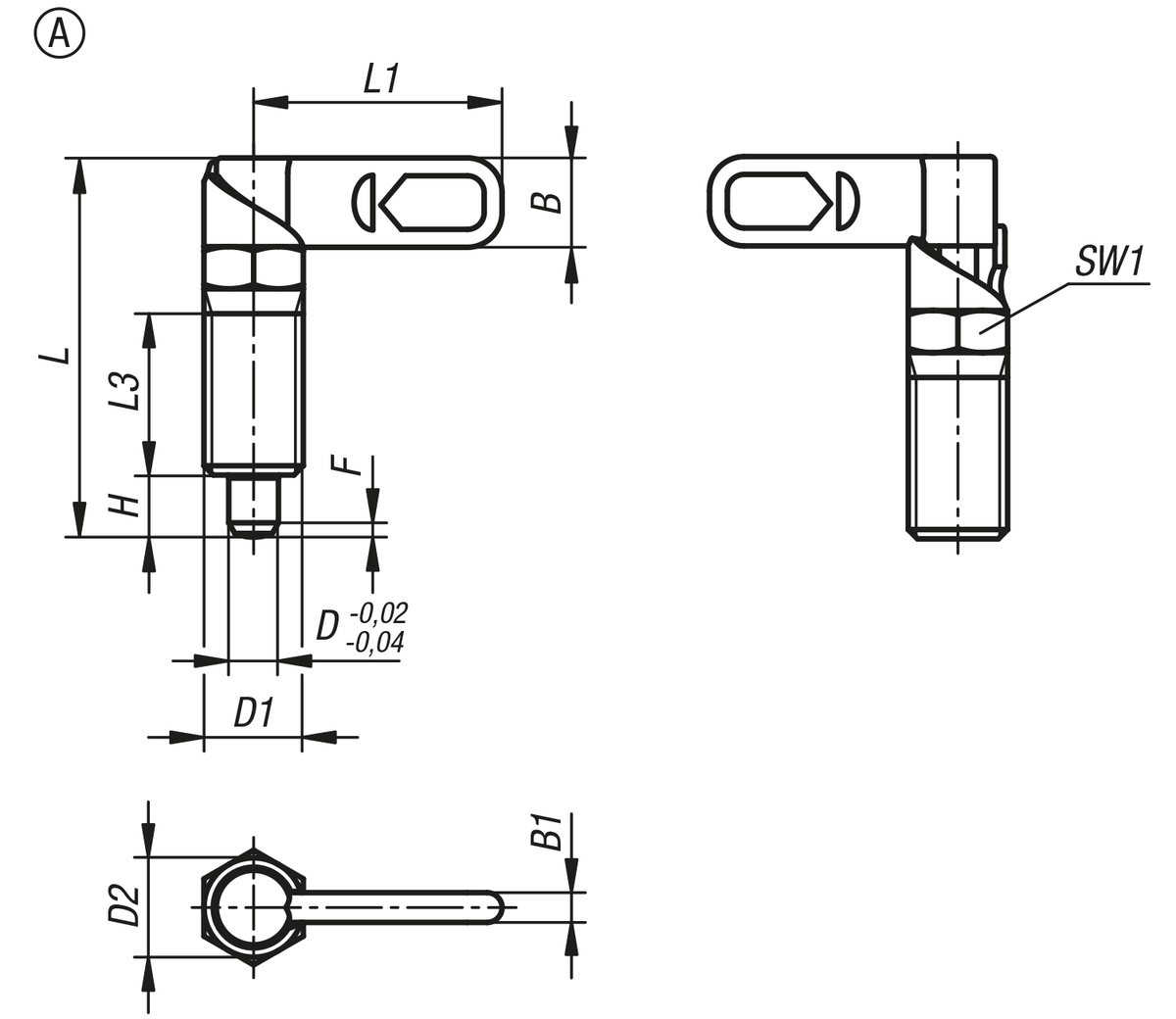
| F x 30° | 2,8 |
|---|---|
| Força de mola final F2 aprox. N | 60 |
| Força de mola inicial F1 aprox. N | 20 |
| L | 71 |
| H | 12 |
| B1 | 6 |
| D | 10 |
| SW1 | 20 |
| D2 | 20 |
| L1 | 50 |
| D1 | M20x1,5 |
| B | 18 |
| L3 | 30 |
| Forma | A |
| Versão 2 | à direita |
| Versão 1 | com batente |
| Denominação | Trinco |
| Contraporca | sem contraporca |
| Tipo de forma | com casquilho roscado |